Source Bio degradable disposable garden grow bags for Balcony, Greenhouse, Nursery
Source bio degradable disposable garden grow bags from 30 verified suppliers. Compare options made from non-woven fabric, plant fiber, and plastic. Evaluate features like eco-friendly design, biodegradability, and customized capacities for indoor, outdoor, and greenhouse applications; compare the available evidence and request quotations based on your requirements.
Key considerations
Products List
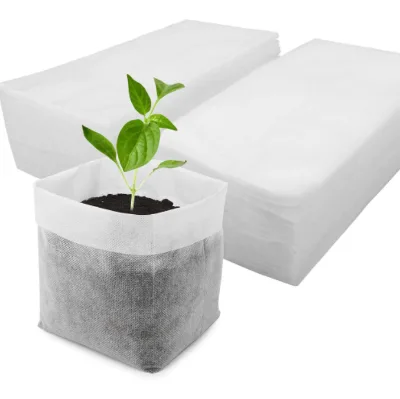


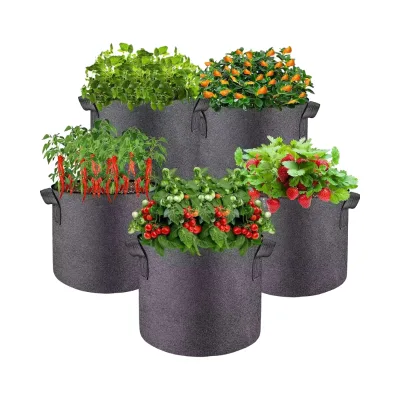


Comprehensive Sourcing Guide
Bio Degradable Disposable Garden Grow Bags Sourcing Guide
Buyers must first distinguish between non-woven fabric and plant fiber options when sourcing bio-degradable disposable garden grow bags, as material composition dictates the specific biodegradation timeline and soil interaction. The observed market data indicates a primary focus on non-woven fabric products with thicknesses ranging from 0.01 cm to 0.7 oz, alongside plant fiber variants designed for specific nursery applications. Understanding this material divergence is critical because non-woven options often prioritize durability and air-pruning capabilities, whereas plant fiber bags may offer faster decomposition rates for short-term seedling cycles.
Procurement teams should also evaluate the observed customization capabilities, which include variable capacities from 5 gallons up to 30 gallons and color options like white or black. These physical attributes directly influence the bag's suitability for different planting scenes, such as balcony gardens or indoor greenhouses. Buyers need to verify if the supplier can accommodate specific model numbers like JN3931 or BZ-PB29, ensuring the selected product aligns with the intended application scene and the specific growth requirements of the target flora.
Product Scope and Observed Listing Signals
The current market listings reveal a diverse range of product types, including standard grow bags, nursing bags, and seeding nursery bags, each serving distinct stages of plant development. Buyers should note that while some products are explicitly labeled as eco-friendly and biodegradable, others may rely on plastic materials that do not fully decompose, requiring careful scrutiny of the material specification before placing an order. The presence of features like handles and planting holes indicates a focus on user convenience and root health, which are essential for successful transplanting in various garden environments.
Listing signals also highlight significant variations in packaging and unit definitions, with some suppliers offering bundles of 100 pieces while others ship 500 pieces per carton. This inconsistency necessitates a clear definition of the "selling unit" to avoid confusion during the ordering process and to accurately calculate logistics costs. Buyers must confirm whether the product is sold as a single item or in bulk bundles, as this affects the minimum order quantity requirements and the overall cost efficiency for large-scale agricultural or landscaping projects.
Technical Specifications to Verify
Thickness and dimensional accuracy are paramount when verifying the technical specifications of bio-degradable grow bags, as these factors determine the structural integrity during the growing season. Observed data suggests thicknesses can vary from 0.01 cm to 0.7 oz, and buyers must ensure the selected thickness matches the expected weight of the soil and plant to prevent tearing or collapse. Additionally, the single package size of 9x7x5 cm for certain models indicates compact storage potential, which is a valuable consideration for suppliers managing inventory space and shipping volume.
Buyers should also scrutinize the shape and capacity specifications, noting that round shapes are common but capacities range widely from 5 gallons to 30 gallons. The presence of specific model numbers like ZZD01 or zp22 suggests that manufacturers may have distinct production lines for different sizes, requiring precise matching to the buyer's needs. Verifying the planting hole configuration, such as circle-shaped holes, is also essential to ensure proper drainage and aeration, which are critical for preventing root rot and promoting healthy plant growth in disposable nursery settings.
Compliance and Safety Documentation
While the product features are often described as eco-friendly and biodegradable, buyers must request specific documentation to substantiate these claims rather than relying solely on marketing labels. The absence of explicit certification data in the provided facts means that procurement teams should ask for third-party test results or compliance certificates that verify the biodegradation rate and the absence of harmful microplastics. Without concrete evidence, the "eco-friendly" designation remains an observation rather than a verified attribute, posing a potential risk for buyers targeting environmentally conscious markets.
Safety documentation should also address the material composition, particularly for products listed with plastic materials versus those made from plant fiber. Buyers need to ensure that any chemical treatments or dyes used in the production process, such as those creating white or black colors, do not leach harmful substances into the soil. Requesting a material safety data sheet (MSDS) or a declaration of conformity is a prudent step to confirm that the grow bags meet general safety standards for agricultural use and do not pose risks to the plants or the end consumer.
Cost Drivers and Commercial Terms
The minimum order quantity (MOQ) is a significant cost driver in this category, with observed ranges spanning from 3,000 pieces to as high as 500,000 pieces depending on the supplier and customization level. Buyers must align their order volume with these MOQ thresholds to avoid prohibitive per-unit costs or the need to negotiate custom production runs that may incur additional setup fees. Understanding the relationship between order volume and unit price is essential for budgeting, especially when sourcing specialized models like the JN3931 or BZ-PB29 series.
Commercial terms also include variations in packaging and shipping logistics, such as the 100 pieces per bundle or 500 pieces per carton configurations observed in the market. These packaging standards directly impact the total shipping volume and the associated freight costs, which can vary significantly based on the single gross weight of 0.035 kg per unit. Buyers should calculate the total landed cost by factoring in these packaging efficiencies and the potential for customized capacity requirements, ensuring that the final price per functional unit remains competitive within their procurement strategy.
Supplier Qualification and Quality Control
Supplier qualification should focus on verifying the production method, as the observed data indicates a mix of semi-manual and semi-mechanical processes that can affect consistency and quality control. Buyers need to assess whether the supplier's production capabilities can maintain uniform thickness and structural integrity across large batches, particularly when dealing with customized capacities or specific model numbers. The location of origin, such as Fujian or Zhejiang in China, may also influence the supply chain reliability and the ability to respond to quality issues in a timely manner.
Quality control protocols must include checks for material consistency, ensuring that the non-woven fabric or plant fiber meets the specified thickness and durability requirements. Buyers should implement incoming quality inspections to verify that the planting holes are correctly formed and that the handles, if present, are securely attached. Given the variability in observed product attributes, establishing a clear quality acceptance criteria based on the specific model number and material type is crucial to prevent receiving substandard goods that could compromise plant health.
Long-Term Procurement Checks
Long-term procurement strategies should include regular audits of the supplier's ability to maintain consistent product specifications over time, especially when dealing with customized orders. Buyers must monitor whether the supplier can consistently deliver the observed features, such as the eco-friendly and biodegradable claims, without compromising on the structural integrity of the grow bags. Continuous verification of the production method and material source is necessary to ensure that the product remains suitable for the intended application scenes, such as balcony gardens or greenhouses.
Additionally, buyers should track market trends and technological advancements in bio-degradable materials to ensure their sourcing strategy remains competitive and sustainable. As the industry evolves, new standards or certifications may emerge that could impact the viability of current product lines. Establishing a feedback loop with the supplier to discuss potential improvements in thickness, capacity, or biodegradation rates will help maintain a high-quality supply chain and adapt to changing environmental regulations or customer expectations in the long run.
FAQs
What materials are used for these grow bags?
The grow bags are manufactured from non-woven fabric, plant fiber, or plastic materials. These options provide varying levels of durability and eco-friendliness. Buyers can select based on specific application needs, such as balcony gardening or indoor greenhouse use. The materials are designed to support healthy plant growth while offering distinct physical properties for different agricultural scenarios.
Can I customize the capacity of the grow bags?
Yes, customized capacity is available for these grow bags. Options include standard sizes like 5 gallons or specific dimensions such as 70*50 cm. Buyers can also choose from various gallon sizes ranging from 3 to 30 gallons. This flexibility allows for tailored solutions to meet specific planting requirements and spatial constraints in garden or greenhouse environments.
What is the minimum order quantity for these bags?
The minimum order quantity varies significantly, ranging from 1 to 500,000 pieces depending on the supplier and product model. Some specific models require a minimum of 3,000 pieces. Buyers should verify the exact MOQ with the manufacturer before placing an order, as this threshold directly impacts initial procurement costs and inventory planning for bulk purchases.
Are these grow bags suitable for indoor use?
Yes, these grow bags are suitable for indoor, outdoor, and greenhouse applications. They are designed for balcony gardens and general plant growth. The simple style and round shape make them versatile for various settings. Buyers can use them for flowers and plants in controlled environments, ensuring effective root development and easy maintenance within indoor spaces.
What are the packaging details for bulk orders?
Packaging details vary by product model. Some bundles contain 100 pieces, while others are packed with 500 pieces per carton. The single package size is approximately 9x7x5 cm with a gross weight of 0.035 kg. Buyers should confirm the specific packing configuration with the supplier to ensure efficient logistics and storage management for large orders.
Where are these grow bags manufactured?
These grow bags are manufactured in China, specifically in regions like Fujian and Zhejiang. The production methods are semi-manual and semi-mechanical. Buyers can expect consistent quality from these established manufacturing hubs. The origin information helps in assessing shipping logistics and lead times, ensuring that procurement decisions align with supply chain efficiency and regional manufacturing capabilities.